Menopause – how long does it last?
It should be remembered that according to the World Health Organization, menopause is defined as the last menstrual period, whereas the perimenopausal period preceding it can last from a few to over a dozen years. For some women, the symptoms appearing during this time are mild and short-lived, while for others they are more burdensome. It is important that every woman who experiences them regularly monitors her health and, if necessary, consults a gynecologist.
– There are various therapeutic options that can help alleviate symptoms and improve the quality of life for women struggling with negative symptoms during the climacteric period. One of them is hormone replacement therapy, which involves taking estrogens or estrogens combined with progesterone. Some women use herbal preparations containing phytoestrogens. Regular physical activity, a healthy diet, and relaxation techniques are also recommended to help at this stage of life - explains M.D. Maria Niedźwiecka, specialist in gynecology and obstetrics from the Bocian Clinic in Gdańsk.
First symptoms of approaching menopause
Women may experience various symptoms appearing throughout the perimenopausal period, and not all of them must occur. The first signal of this process is the shortening of the menstrual cycle. Hormonal fluctuations can cause spotting between periods. More intense premenstrual syndrome (PMS) symptoms also appear, such as breast pain, and lower abdominal and back pain. What is more, menstrual bleeding becomes irregular and cycles become anovulatory. Furthermore, the following may occur:
- hot flashes,
- mood swings,
- weight gain,
- sleep difficulties,
- vaginal dryness,
- pain during sexual intercourse,
- decreased libido,
- urinary incontinence,
- rapid heartbeat,
- hair loss or thinning,
- difficulties concentrating,
- temporary memory lapses.
Menopause – age
It cannot be predicted specifically when a given person will experience menopause. However, it is generally assumed that it usually occurs around the age of 45–55. The time of its occurrence may vary depending on individual genetic factors, lifestyle, and health status.
Menopause – when can it occur earlier?
Some women experience menopause earlier, even before the age of 40 or even 35. This premature menopause can be genetically determined, caused by autoimmune disorders, or other unknown causes. What is more, premature menopause can also be induced as a result of surgical procedures on the ovaries or medical interventions that cause the cessation of ovarian function, for example, as a result of radiotherapy or chemotherapy.
Premature menopause and pregnancy
Premature menopause can be problematic when it comes to achieving pregnancy. Women with this diagnosis may have difficulty conceiving a child naturally. Nevertheless, it is not impossible; everything depends on the progression of this process and whether the ovaries can still release egg cells. Before a gynecological endocrinologist makes a diagnosis of early menopause, several tests are necessary, especially hormonal tests and ultrasound. An appropriate place for this will be a fertility clinic. In case of difficulties conceiving, women may require medical support, such as hormonal treatment or assisted reproductive technology, including in vitro fertilization (IVF).
Can you diagnose menopause yourself?
Most women can assess for themselves whether they are approaching the climacteric period by analyzing the various physical and psychological symptoms mentioned earlier. Test strips, which work similarly to pregnancy tests but check a different hormone – follicle-stimulating hormone (FSH) – are also a supportive tool in diagnostics. However, it should be kept in mind that when using hormone therapy, their results may be less reliable. Blood concentrations of FSH at this stage of life are significantly higher. Measuring blood estradiol levels is also helpful in confirming a menopause diagnosis, as its low concentrations can indicate weakened ovarian activity.
– Changes associated with approaching menopause occur gradually, sometimes causing women difficulty in properly recognizing them; as a result, they do not know whether the last period was indeed the final one in their lives. Therefore, it is worth regularly monitoring one's health with a gynecologist who, based on reported symptoms and test results, will be able to diagnose menopause. It is worth remembering that even after menopause, women may experience spotting or bleeding whose cause is not related to menstruation. If they occur, they should be consulted with a doctor - explains M.D., Maria Niedźwiecka, obstetrician-gynecologist from the Bocian Clinic in Gdańsk.
Menopause and pregnancy
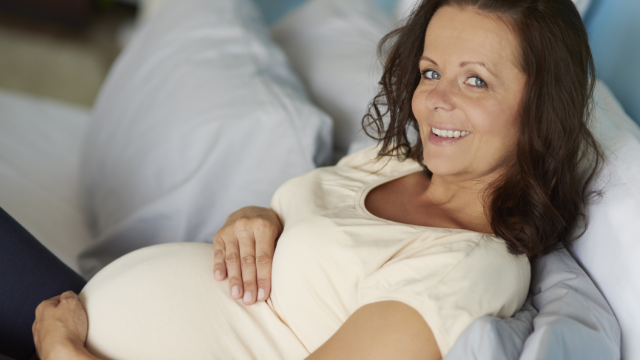
There is a possibility of conceiving a child during the perimenopausal period when menstrual cycles are irregular, although it is already significantly more difficult. For this reason, using contraception to avoid unintended pregnancy is recommended until 12 consecutive months without menstruation have passed. At the same time, for many people, late motherhood is a positive surprise and a cause for joy. In such a case, one must consider that pregnancy after forty is associated with a higher risk of fetal defects, miscarriage, premature delivery, or the development of life-threatening preeclampsia. Therefore, the expectant mother should be under close medical supervision.
How to distinguish menopause from pregnancy?
Many women wonder how to distinguish menopause—the physiological cessation of menstruation—from pregnancy, when bleeding also stops. It turns out that this can sometimes be difficult, especially in women of perimenopausal age, where menstrual cycles can be irregular. One solution is to perform a pregnancy test and consult a doctor. For greater accuracy, the doctor can perform blood tests to measure elevated levels of hormones associated with pregnancy, such as beta-hCG and progesterone.
Pregnancy after menopause
Patients often look for information on whether it is possible to get pregnant after menopause. Pregnancy after menopause—that is, one year after the last menstrual period—is a rare phenomenon due to the fact that a woman loses the natural ability to conceive a child. After menstruation ceases, the ovaries stop producing egg cells, which makes natural fertilization impossible. However, in some patients, there is the option of using assisted reproductive technologies, such as in vitro fertilization (IVF) using donor egg cells or using previously frozen oocytes. It should be remembered that each case requires an individual evaluation and consultation with a specialist.