Low ovarian reserve – causes
The key factor affecting low ovarian reserve is the patient’s age. It is generally considered that ovarian reserve begins to decline significantly after the age of 35–38. The number of egg cells continues to decrease until menopause, when a woman reaches the end of her reproductive years. However, there are situations in which reduced ovarian reserve occurs in much younger patients, including women in their thirties and even their twenties. In such cases, we are dealing with premature ovarian failure/insufficiency (POF/POI), which may eliminate the chance of becoming pregnant naturally. However, it is difficult to clearly determine the causes of this disorder. Doctors believe that it may be influenced by factors such as:
- certain diseases and genetic disorders,
- previous ovarian surgery,
- ovarian cysts,
- ovarian endometriosis,
- cigarette smoking,
- chemotherapy,
- radiotherapy.
With age, not only does ovarian reserve, meaning the number of ovarian follicles, decrease, but the quality of oocytes also deteriorates. As a result, difficulties may occur with fertilization of the egg cells as well as with the proper development of the embryo.
Low ovarian reserve – tests
The basic test used to assess ovarian reserve is the AMH test, which measures anti-Müllerian hormone. It is produced by immature antral follicles found in the ovary. Klinika Bocian fertility clinic offers this test on site, with the result available after approximately 1 hour. – We have several markers used to assess ovarian reserve, and one of the most commonly used is the AMH hormone. Testing is very convenient because AMH levels can be measured at any point in the cycle without any preparation. The higher the level of this hormone in the body, the greater the ovarian reserve. The AMH level indicates the potential number of ovarian follicles, but it does not provide any information about their quality. The patient’s age has a major impact on this. This is particularly important when interpreting test results – explains Arkadiusz Adamczyk, MD, from Klinika Bocian in Gdańsk.
Another important method of assessing ovarian reserve is an ultrasound examination – AFC (Antral Follicle Count). It is performed at the beginning of the menstrual cycle. An ultrasound examination makes it possible to determine the number of antral follicles that are ready to grow and develop into dominant follicles in which an egg matures. This occurs under the influence of natural gonadotropins produced by the pituitary gland. Another test that can be used to assess ovarian reserve is the measurement of follicle-stimulating hormone (FSH) levels in the blood serum. This test is also recommended at the beginning of the cycle, together with an ultrasound examination, which provides an accurate picture of the patient’s medical situation. The results of hormonal and ultrasound examinations should always be discussed with a doctor.
Low ovarian reserve and treatment
Currently, medicine does not know of any method that can completely stop the process of declining ovarian reserve. – Ovarian reserve can only decrease. Unfortunately, there is nothing we can do to increase it. Women have a certain limited period of time during which their own eggs can be fertilized and result in pregnancy. This is a very individual matter, as sometimes women in their forties become mothers without medical assistance, while in other cases patients under the age of thirty may already experience an early loss of fertility due to premature ovarian insufficiency. Determining the treatment methods depends on the cause of the problem as well as the goal we want to achieve. We will take a different approach in patients trying to have a child compared with women who, for example, only want to alleviate the negative symptoms of menopause – explains Arkadiusz Adamczyk, MD, from Klinika Bocian in Gdańsk.
A healthy lifestyle is important for fertility and ovarian reserve. Therefore, women should maintain an appropriate diet and physical activity, as well as avoid stress and give up stimulants, including cigarettes and alcohol. In the treatment of reduced ovarian reserve, hormone therapy and ovulation stimulation with medication are often used. Supplementation may also be recommended with:
- melatonin,
- the adrenal androgen DHEA or coenzyme Q10, which may improve the response to stimulation,
- vitamin D.
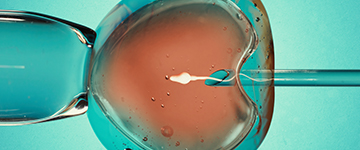
Another option is fertility preservation, which involves freezing eggs that can be used for in vitro fertilization in the future. This approach is particularly recommended for patients who are at increased risk of losing their ovarian reserve, for example those planning cancer treatment or planning to try for pregnancy after the age of 35.
Low ovarian reserve and fertility
Reduced ovarian reserve does not always rule out the possibility of becoming pregnant. Appropriate diagnostic testing and treatment can significantly facilitate fertilization. If patients with low ovarian reserve who are trying to conceive have a poor response to hormone therapy as well as other treatment methods, they should consider undergoing in vitro fertilization (IVF). Such support and specialist treatment are available at Klinika Bocian.